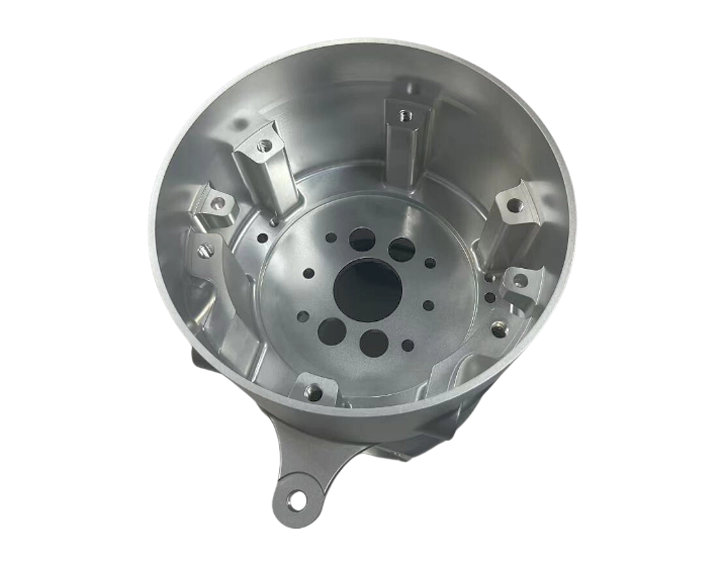
CNC (Computer Numerical Control) turning machining has become a cornerstone of modern manufacturing due to its exceptional precision, efficiency, and flexibility.
It is particularly suited for producing small-lot, high-variety, and geometrically complex parts across a wide range of industries. Below, we explore the core features that make CNC turning a preferred solution for high-performance part production.
Exceptional Adaptability for Complex and Custom Parts
One of the most valuable attributes of CNC turning is its strong adaptability, often referred to as manufacturing flexibility. Traditional machining requires hardware reconfiguration or mechanical adjustments when switching between part types or designs. In contrast, CNC turning machines only require a modification of the digital program—eliminating downtime caused by mechanical changes.
This capability makes CNC turning ideal for:
Rapid prototyping
Small-batch production
Highly customized or complex part geometries
Manufacturers can quickly adapt to evolving product designs or customer specifications, making CNC turning a key enabler of agile manufacturing.
High Precision and Consistent Quality
CNC turning machines deliver outstanding dimensional accuracy and repeatability. Controlled entirely through digital commands, CNC systems minimize operator influence, thereby reducing the risk of human error and inconsistency.
Key factors contributing to high precision include:
Precision linear guides and ball screws
High-rigidity machine structures
Closed-loop servo control systems
Automatic compensation for backlash and pitch errors
Modern CNC lathes can achieve positioning accuracy between ±0.002mm and ±0.005mm. Such precision ensures stable quality in batch production, making CNC turning ideal for industries with strict tolerance requirements, such as aerospace, automotive, and medical device manufacturing.
Enhanced Production Efficiency
CNC turning greatly enhances productivity by optimizing cutting parameters and reducing non-productive time. With rapid tool changes, multi-functional capabilities, and high-speed spindles, CNC lathes can perform more operations in less time compared to conventional machines.
Benefits of improved efficiency include:
Reduced cycle times
Greater material removal rates
Simultaneous multi-process operations (e.g., turning, milling, drilling)
Minimal setup time between jobs
The integration of machining center technologies into CNC lathes also allows manufacturers to complete complex components in a single setup, minimizing tool changes and improving overall throughput.
Reduced Labor Dependency and Increased Operational Safety
The high level of automation in CNC turning minimizes manual intervention during the machining process. Operators primarily focus on machine setup and monitoring, which significantly reduces labor intensity and safety risks.
Advantages include:
Lower likelihood of workplace accidents
Reduced operator fatigue
Less reliance on highly skilled manual machinists
Streamlined workflow in automated production lines
CNC turning systems are especially beneficial in environments that demand continuous production with consistent output quality and safety compliance.
Conclusion
CNC turning machining has revolutionized precision manufacturing by combining adaptability, accuracy, efficiency, and automation into a single process. Its ability to deliver consistent quality across complex, customized, or small-batch production makes it an indispensable solution in today’s competitive manufacturing landscape.
By investing in CNC turning technology, manufacturers can meet stringent quality standards, respond quickly to market demands, and achieve significant gains in productivity and cost-efficiency.