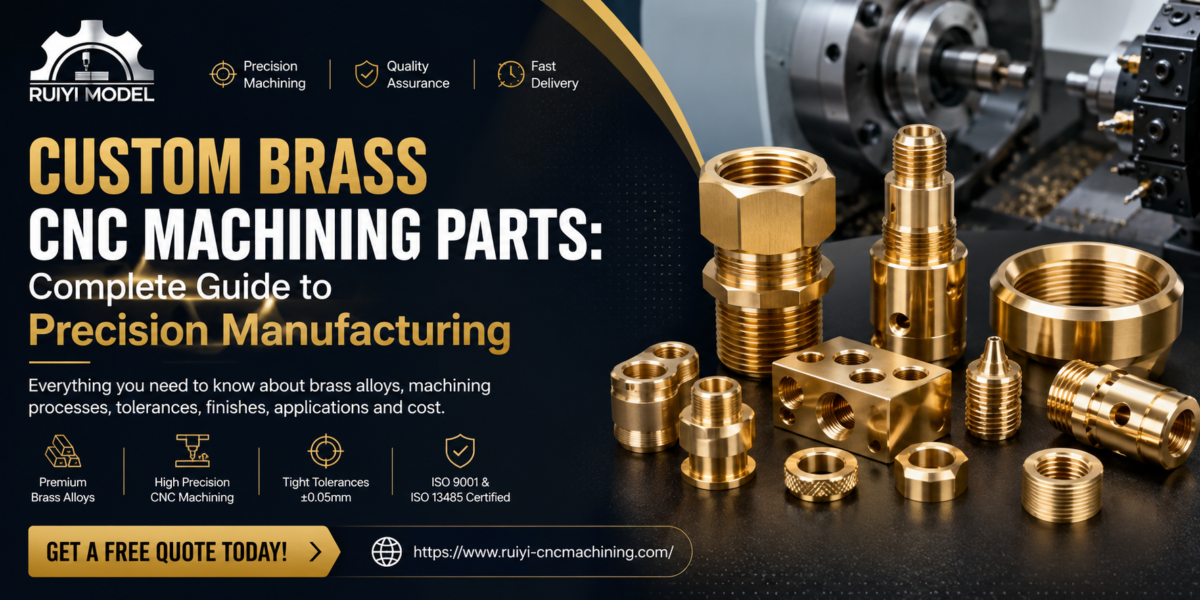
If a part needs to conduct electricity, resist corrosion, and hold a tight tolerance without adding much cost, brass is usually the first material an engineer reaches for. Brass CNC machining parts account for a large share of the connectors, valves, fittings, and electrical components running through industrial equipment worldwide, and for good reason: brass cuts cleanly, machines fast, and finishes beautifully. This guide walks through everything a buyer or design engineer needs to specify, source, and manufacture custom brass parts with confidence, from alloy selection through final inspection, and shows where RuiYi’s CNC machining services fit into that process.
Key Takeaways
- Brass CNC machining parts combine fast machinability, corrosion resistance, and electrical conductivity in one material.
- C360 is the standard alloy for high-volume turned parts; C260 suits parts that need forming.
- Standard tolerances of plus or minus 0.05 to 0.13 mm are achievable on most brass components.
- Alloy choice, complexity, volume, and finish are the main cost drivers.
- A supplier that gives honest DFM feedback before production is worth more than a lower quote.
What Is Brass CNC Machining?
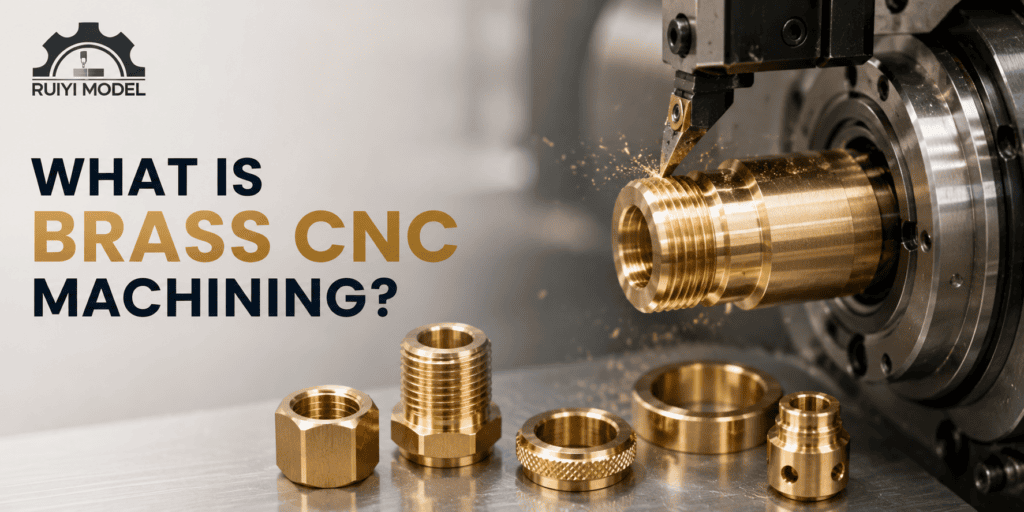
Brass CNC machining is the process of shaping a solid brass bar, rod, or plate into a finished component using computer controlled cutting tools. A CAD model drives the toolpath, and a CNC lathe or milling center removes material in a series of passes until the part matches the drawing, typically to tolerances of plus or minus 0.05 mm or tighter. Because brass responds so predictably to cutting forces, it is one of the few metals where a shop can push feed rates hard without sacrificing surface finish or dimensional accuracy.
Most CNC machined brass parts start life as round bar stock and are produced on CNC turning centers, since a large share of brass components are rotationally symmetric: bushings, standoffs, fittings, and connectors. Flat or block stock is milled on 3-axis, 4-axis, or 5-axis machining centers when the geometry calls for flats, slots, or off-axis features.
Why Manufacturers Choose Brass for CNC Machined Parts
Brass earns its place on the shop floor for a combination of reasons that few other metals match at once:
- Machinability. Brass cuts with short, manageable chips and low tool wear, which shortens cycle times and lowers per-part cost compared with steel or titanium.
- Corrosion resistance. Brass resists atmospheric corrosion and performs well in humid or marine environments without a protective coating.
- Electrical and thermal conductivity. Brass conducts both heat and electricity efficiently, which is why it shows up so often in connectors, terminals, and heat-transfer components.
- Antimicrobial properties. The copper content in brass gives it natural antimicrobial characteristics, useful in plumbing fixtures and medical hardware.
- Aesthetic finish. Brass takes a polish well and is often left uncoated for decorative or architectural components.
- Cost relative to performance. Brass sits below many specialty alloys in raw material cost while still delivering strength comparable to mild steel in low and moderate stress applications.
Did You Know? Brass alloy C36000, known as free-cutting brass, is the reference material the entire metals industry uses to rate machinability. The Copper Development Association set its machinability index at exactly 100, meaning every other copper alloy, and often every other metal, is compared against how fast and cleanly C36000 machines are. Source: Copper Development Association.
Common Brass Alloys Used in CNC Machining
Not all brass is the same, and picking the right alloy has a direct effect on machining speed, formability, and final part cost.
C360 (Free-Cutting Brass)
C360 is roughly 61.5 percent copper, 35.5 percent zinc, and 3 percent lead. That small lead content acts as an internal chip breaker and lubricant, giving C360 its 100 percent machinability rating. It is the default choice for high-volume CNC turning of gears, valve components, and screw machine parts.
C260 (Cartridge Brass)
C260 contains about 70 percent copper and 30 percent zinc with no significant lead. It machines less aggressively than C360 but offers superior ductility, making it the better option for parts that also need to be formed, stamped, or cold worked, such as electrical clips and housings.
Naval Brass and Other Specialty Grades
Naval brass adds a small percentage of tin for better resistance to seawater corrosion, which suits marine hardware and shafts. Specialty grades exist for higher strength or specific plating requirements, and a good supplier will help you weigh the tradeoffs for your application.
Applications of Brass CNC Machining Parts
Because of its balance of properties, brass shows up across a wide range of industries:
- Electrical and electronics: connectors, terminals, switch components, and heat sinks
- Plumbing and fluid control: valve bodies, fittings, and fixtures
- Automotive: fuel system components, bushings, and sensor housings
- Aerospace: low-stress fittings and instrument components where conductivity and corrosion resistance matter
- Medical devices: instrument components that benefit from brass’s natural antimicrobial surface
- Decorative and architectural hardware: fixtures, nameplates, and fittings finished to a polished or brushed appearance
How Brass CNC Machining Parts Are Made
A typical production run for custom brass parts follows a consistent sequence, and it is worth reading our companion guide on designing brass CNC parts for better manufacturability before finalizing a drawing, since geometry decisions made at this stage drive most of the cost that follows:
- Design review and DFM feedback. The supplier reviews the CAD file for wall thickness, tool access, and tolerance callouts before quoting.
- Material selection and procurement. Bar or plate stock is selected in the correct alloy, temper, and diameter.
- CNC turning or milling. The part is roughed, then finished, on CNC lathes for rotational parts or machining centers for prismatic geometry.
- Secondary operations. Threading, knurling, drilling, or off-axis milling is added as needed.
- Surface finishing. Options include as-machined, polishing, bead blasting, or plating.
- Inspection. Critical dimensions are checked with CMM or optical comparators against the drawing before shipment.
Tolerances, Finishes, and Quality Control
Because brass machines are so predictable, most shops can hold general tolerances of plus or minus 0.05 mm to 0.13 mm on standard features, with tighter bands achievable on critical dimensions using CMM verification. Wall thickness for brass components can safely go down to around 0.8 mm in a typical shop, with values closer to 0.5 mm achievable under controlled conditions, though thinner sections increase the risk of chatter and part distortion during clamping.
Common finishes for brass CNC machining parts include as-machined (which already looks clean thanks to brass’s natural finish), hand polishing or buffing for decorative parts, bead or sand blasting for a matte texture, and electroplating (nickel, chrome, or gold flash) when a part needs a different surface color or added wear resistance. If plating is required, tolerances should be specified as pre-plate or post-plate to avoid fit issues on threads and bores.
Cost Factors for Brass CNC Machining Services
Several variables drive the price of a brass CNC machining project:
- Alloy choice: C360 machines faster and cheaper than C260 for equivalent geometry because of its higher machinability rating.
- Part complexity: multiple setups, tight tolerances, and small features add cycle time.
- Order volume: per-part cost drops significantly as batch size increases, since setup cost is spread across more units.
- Finish and plating: secondary finishing adds handling steps and lead time.
- Inspection requirements: full CMM reporting on every dimension costs more than a standard sampling plan.
Buyers comparing quotes should ask exactly which alloy and temper is being priced, since a quote based on C260 will differ meaningfully from one based on C360 for the same drawing.
Choosing a Brass CNC Machining Partner
Brass is forgiving to machines, but consistent quality on high-volume orders still depends on the supplier’s process discipline. Look for a documented quality system such as ISO 9001, real inspection equipment rather than caliper-only checks, and a willingness to give honest DFM feedback before cutting metal. Our guide to selecting a CNC machining brass parts supplier for long-term manufacturing covers this topic in full.
Working with clients across plumbing, electronics, and industrial equipment over the years, one pattern holds up consistently: the projects that go smoothly are the ones where the supplier flags a manufacturability issue during quoting rather than after the first batch ships. That single habit prevents more rework than any certificate on the wall. RuiYi produces custom brass components under ISO 9001:2015 and ISO 13485 certification, with dedicated CNC turning capacity for high-volume rotational parts and a free DFM check included on every quote.
Ready to get a quote on your brass part? Send us your drawing and our engineering team will review it for manufacturability and reply with pricing. Contact RuiYi today.
Frequently Asked Questions
What is the best brass alloy for CNC machining?
C360 free-cutting brass is the best choice for most CNC turned parts because of its 100 percent machinability rating. C260 is preferable when the part also needs forming or cold working after machining.
How tight of a tolerance can brass CNC machining achieve?
Standard shop tolerances run plus or minus 0.05 mm to 0.13 mm, with tighter tolerances achievable on individual critical features using CMM-verified processes.
Is brass more expensive than aluminum for CNC machining?
Raw brass typically costs more per kilogram than aluminum, but brass’s faster cycle times and excellent surface finish can offset some of that difference, especially on high-volume turned parts.
Can brass CNC machined parts be plated?
Yes. Brass accepts nickel, chrome, gold flash, and other platings well, though C360’s lead content typically requires a pre-plate treatment step.
What industries use brass CNC machining parts the most?
Electrical and electronics, plumbing, automotive, and medical device manufacturing are the heaviest users of custom brass parts, largely due to brass’s conductivity and corrosion resistance.
Is brass CNC machining suitable for prototypes and low-volume runs?
Yes. Brass’s machinability makes it practical for both one-off prototypes and high-volume production without major process changes between the two.
Final Words
Brass earns its place on almost every shop floor for a simple reason: it machines fast, resists corrosion, conducts electricity, and still looks good doing it. The decisions that actually control cost and quality happen earlier than most buyers expect, in alloy selection, tolerance callouts, and the geometry choices covered in this guide. Get those right, and a brass part is one of the easiest things a CNC shop will run all week.
If you are still shaping the drawing, our guide on designing brass CNC parts for better manufacturability is the next logical read. If the drawing is locked and you are evaluating who should cut it, our checklist for selecting a CNC machining brass parts supplier walks through certifications, trial orders, and the questions worth asking before you commit.