Part Complexity
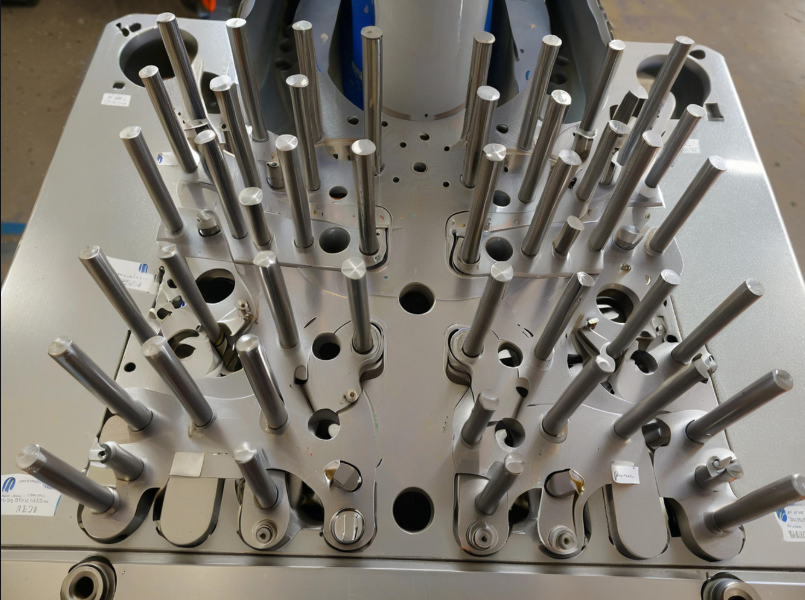
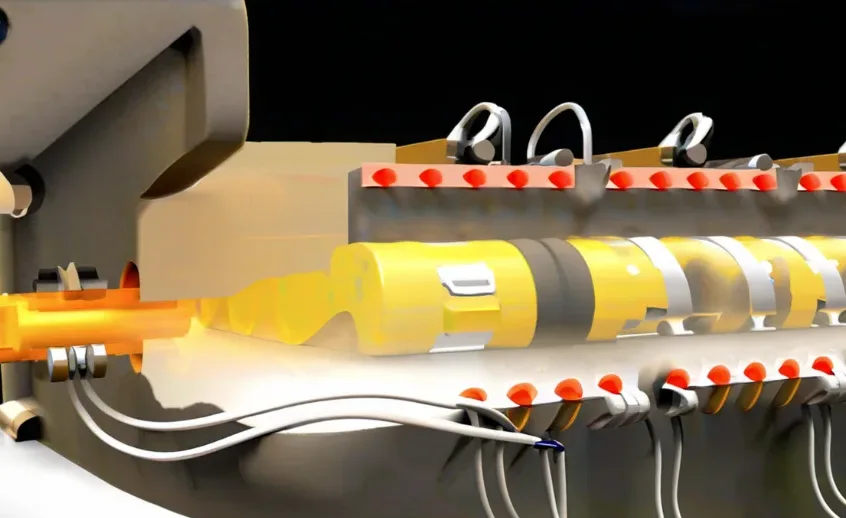
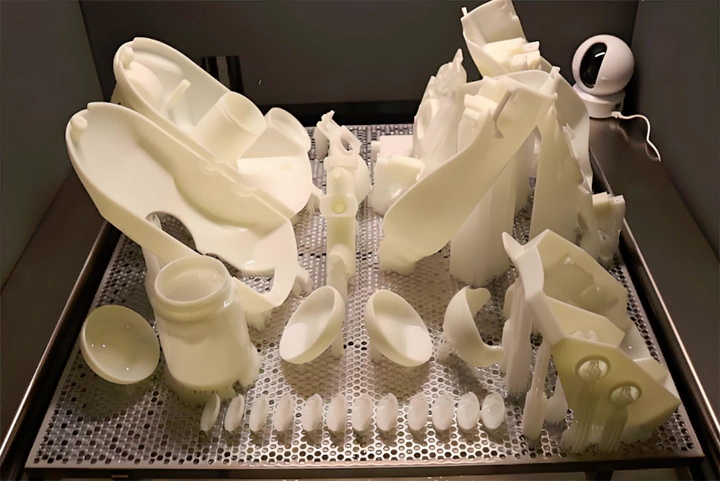
When design software models complex prototypes, rapid prototyping has almost no impact on time and cost. In contrast, CNC machining requires attention to each feature of complex parts, which adds time and cost. As part complexity increases, the number of setups and tool changes in CNC machining also increases. Features like high aspect ratios, holes, deep grooves, and square corners can challenge even high-end CNC machines.
Feature Details
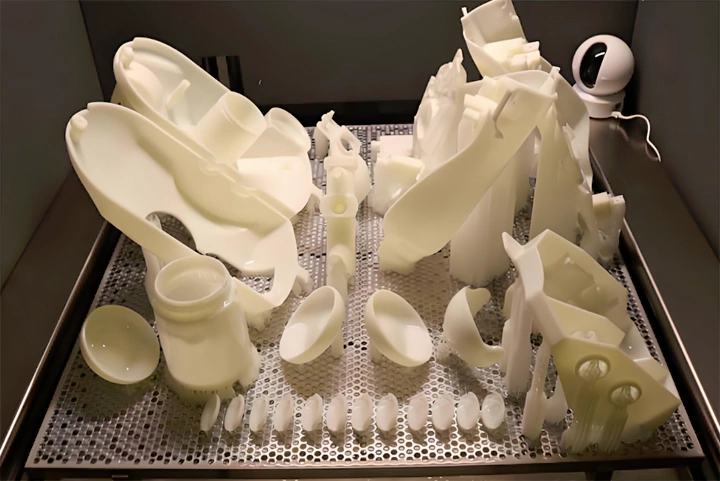
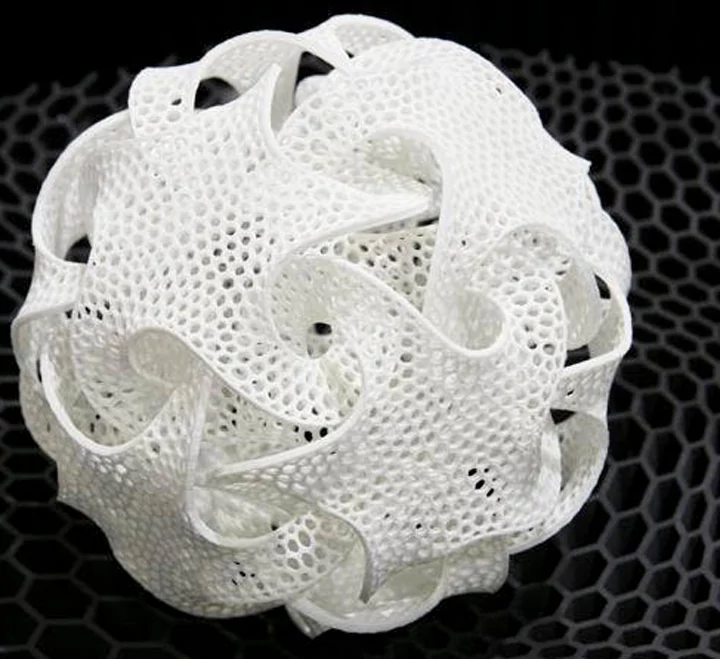
Rapid prototyping can achieve details that CNC machining cannot. For instance, you can produce sharp inside corners, deep narrow channels, highly thin-walled structures, and high aspect ratio ribs and columns. CNC machining excels at smooth surfaces, sharp edges, and clean chamfers but struggles with complex internal features.
Skilled Labor Requirements
RP machining does not require highly skilled labor like CNC technology. It has reduced the need for skilled craftsmen, unlike CNC machining, which relies heavily on skill and creativity. CNC operations need experienced craftsmen to design toolpaths, select machining strategies, and operate and monitor the cutting process.
Staffing
Rapid prototyping needs fewer operators than CNC machining. RP technology also allows the preparation of production and manufacturing files in minutes. Although CNC machining uses CAM software to optimize many steps, it still needs experienced machinists for machine setup and operation, which adds to the cost.
Lead Time
Rapid prototyping requires less labor and is less sensitive to design complexity. This reduces both the lead time for physical builds and the overall production cycle. In contrast, CNC machining involves more variables, such as labor, toolpaths, machining times, fixtures, and materials, which lead to longer lead times.
Conclusion
Rapid prototyping offers significant advantages over CNC machining, especially in fast delivery, handling complex designs, and reducing costs.

Solomon Yang is a manufacturing industry professional with extensive experience in electronic, mechanical, and industrial component manufacturing. Having held various positions in American and Taiwanese manufacturing companies, he has developed a comprehensive understanding of manufacturing processes, production management, quality control, and global supply chain operations.
With expertise in business development, sales operations, international trade, customer relationship management, and engineering project support, Solomon bridges technical knowledge with commercial strategy to deliver innovative and cost-effective manufacturing solutions. He is passionate about advanced manufacturing technologies, process improvement, and continuous professional growth, with a strong commitment to creating value for customers and partners worldwide.