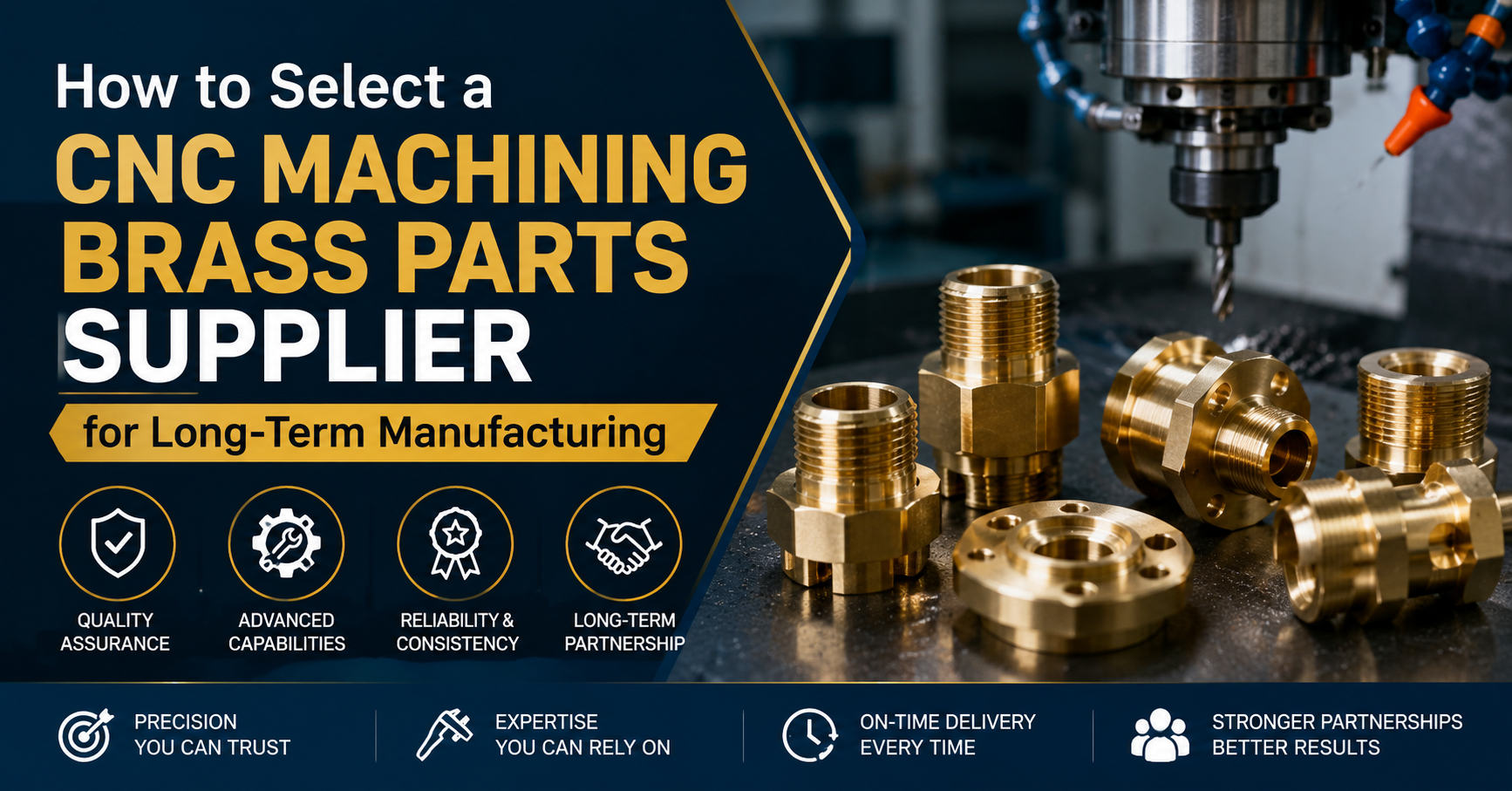
Brass is a forgiving material to machine, which is exactly why the quality gap between suppliers shows up in other places: consistency across batches, honesty during quoting, and what happens when a drawing has an ambiguity nobody caught. Choosing a CNC machining brass parts supplier for a one-off prototype is a different decision than choosing one for a five-year production relationship. This guide covers what to check, what to ask, and what to walk away from, and pairs with our custom brass CNC machining parts guide if you have not finalized alloy and design details yet.
Key Takeaways
- Verify ISO 9001 (and any relevant industry-specific certification) directly rather than trusting a website badge.
- Match the supplier’s equipment, turning-heavy or milling-heavy, to your part’s actual geometry.
- Treat detailed DFM feedback during quoting as the strongest signal of how a supplier will behave in production.
- Always run a small trial order with FAI documentation before committing full volume.
- Ask direct questions about alloy stock, tolerance capability, and nonconformance handling before signing anything.
Why Trust This Guide
This checklist is built from RuiYi’s own experience being vetted by long-term industrial customers, as well as vetting our own material suppliers, under ISO 9001:2015 and ISO 13485 quality systems. It reflects what buyers actually check before committing volume, not a generic vendor scorecard.
Why Supplier Choice Matters More at Volume
A single prototype forgives a lot: a slightly late shipment, an email that takes a day to answer, a finish that is close but not perfect. None of that survives a long-term production contract. At volume, the cost of a supplier relationship shows up in things that never appear in a per-part quote: how quickly they flag a tooling problem before it ships 500 bad parts, whether their material certifications hold up under an audit, and whether their capacity can actually absorb your busiest quarter without quietly extending lead times.
Certifications to Look For
Certifications are not a guarantee of quality, but their absence is a real warning sign. At minimum, look for:
- ISO 9001 for a documented quality management system covering process control, traceability, and corrective action.
- Industry-specific certifications where relevant, such as ISO 13485 for medical device components or IATF 16949 for automotive supply chains.
- Material traceability records tying each batch of brass bar stock back to a mill certificate, so alloy composition is verifiable rather than assumed.
Ask to see the certificate directly rather than taking a website badge at face value, and confirm the certification body is accredited. A shop that hesitates to produce documentation on request is telling you something.
| Certification | Scope | When It Matters Most |
| ISO 9001 | General quality management system: process control, traceability, corrective action | Baseline for any serious industrial supplier |
| ISO 13485 | Quality management specific to medical devices | Parts destined for medical or diagnostic equipment |
| IATF 16949 | Automotive-specific quality management, built on ISO 9001 | Parts entering an automotive supply chain |
| Material Mill Certificate | Traceable record of alloy composition per batch | Any application where alloy verification matters |
Did You Know? More than 1.2 million sites worldwide currently hold a valid ISO 9001 certificate, making it the most widely adopted quality management standard on the planet, and the baseline credential that most industrial buyers now require before they will even open a supplier file. Source: ISO Survey.
Capability and Equipment Fit
Not every CNC shop that lists brass on its materials page runs the right equipment for your part. A supplier heavy in CNC turning centers with live tooling is a strong fit for high-volume brass fittings and connectors, while a shop built around 5-axis milling centers suits complex prismatic brass components better. Ask specifically about:
- Bar feeder capacity and maximum bar diameter for turned parts, which determines whether your volume fits their existing setup or requires new tooling.
- In-house secondary operations such as threading, knurling, or plating, versus operations they outsource, since every outsourced step adds a handoff and a potential delay.
- CMM or optical inspection equipment on-site, backed by a documented quality assurance program, rather than dependence on hand tools for critical dimensions.
DFM Support and Communication
The best signal of a supplier worth a long-term relationship is what they say during quoting, before any metal is cut. A shop that reviews your brass drawing and comes back with specific, geometry-level feedback, a thread that should be standardized, a wall that is thinner than it needs to be, a tolerance that will cost more than it is worth, is showing you exactly how they will behave once you are a production account rather than a one-time order. A shop that quotes the drawing exactly as submitted with no comments at all is either extremely confident or not looking closely. Our design-side companion guide on designing brass CNC parts for better manufacturability covers the specific issues a good DFM review should catch.
Running a Trial Order Before Committing
Before moving full production volume to a new supplier, request a trial order of five to ten parts with full first article inspection (FAI) documentation. This does three things at once: it confirms the supplier can actually hit your tolerances in their real production environment, it surfaces any material or finish issues early, and it gives you a paper trail to compare against future batches if quality ever drifts. Skipping this step to save a few weeks of lead time is one of the most common reasons long-term supplier relationships go wrong.
Questions to Ask Every Shortlisted Supplier
- Which specific brass alloys do you keep in regular stock, and which would require a special buy for our volume?
- What is your standard tolerance capability, and what does it cost to tighten a specific dimension?
- Can you provide a recent customer reference in a comparable industry or volume range?
- What is your typical lead time for a repeat order versus a new part number?
- How do you handle a nonconformance once parts are already in production, and what does your corrective action process look like?
These questions land better when they are backed by a complete quote package rather than asked cold. Our guide on what information to include in a CNC machining RFQ covers what to send a shortlisted supplier alongside these questions.
Red Flags to Watch For
The table below contrasts what a dependable long-term supplier does against the warning signs worth walking away from:
| Area | Green Flag | Red Flag |
| Documentation | Shares certificates and mill traceability records on request | Reluctant or slow to produce documentation |
| Quoting behavior | Returns specific, geometry-level DFM feedback | Quotes the drawing exactly as submitted with no comments |
| Alloy transparency | States the exact alloy and temper being priced | Vague or inconsistent answers about which alloy will be used |
| Trial orders | Willing to run a small FAI trial batch first | Pushes straight to full production volume |
| Inspection | Uses CMM or optical inspection on critical dimensions | Relies entirely on calipers for critical features |
Request a Quote or Trial Order
RuiYi manufactures custom brass components under ISO 9001:2015 and ISO 13485 certification, backed by our China CNC machining services and a Zero-Risk Assurance Policy that lets you check parts before you pay. Review our full CNC machining services capability or start a trial order through our CNC machining cost calculator.
Frequently Asked Questions
What certifications should a CNC machining brass parts supplier have?
ISO 9001 is the baseline expectation for any serious supplier. Industry-specific certifications such as ISO 13485 or IATF 16949 matter if your part falls under medical or automotive requirements.
How many trial parts should I order before committing to production volume?
Five to ten parts with full first article inspection documentation is a common and reasonable starting point for validating a new supplier.
Should I choose a supplier based on price alone?
No. The lowest quote often hides costs elsewhere, in rework, missed deadlines, or unclear alloy sourcing, that only appear after production has started.
What is a red flag when evaluating a brass CNC supplier?
A quote returned with zero manufacturability feedback on a drawing that has obvious room for improvement is one of the clearest warning signs.
Does a supplier’s location matter for brass CNC machining?
Location affects lead time and shipping cost, but a supplier’s quality system, certifications, and communication matter more for long-term reliability than geography alone.
Final Words
Picking a brass CNC supplier is ultimately a bet on how they will behave when something does not go exactly to plan, not just how they perform when everything does. Certifications, equipment fit, and a small trial order will not eliminate every risk, but together they give you real evidence instead of a sales pitch to base a long-term manufacturing relationship on.

Solomon Yang is a manufacturing industry professional with extensive experience in electronic, mechanical, and industrial component manufacturing. Having held various positions in American and Taiwanese manufacturing companies, he has developed a comprehensive understanding of manufacturing processes, production management, quality control, and global supply chain operations.
With expertise in business development, sales operations, international trade, customer relationship management, and engineering project support, Solomon bridges technical knowledge with commercial strategy to deliver innovative and cost-effective manufacturing solutions. He is passionate about advanced manufacturing technologies, process improvement, and continuous professional growth, with a strong commitment to creating value for customers and partners worldwide.