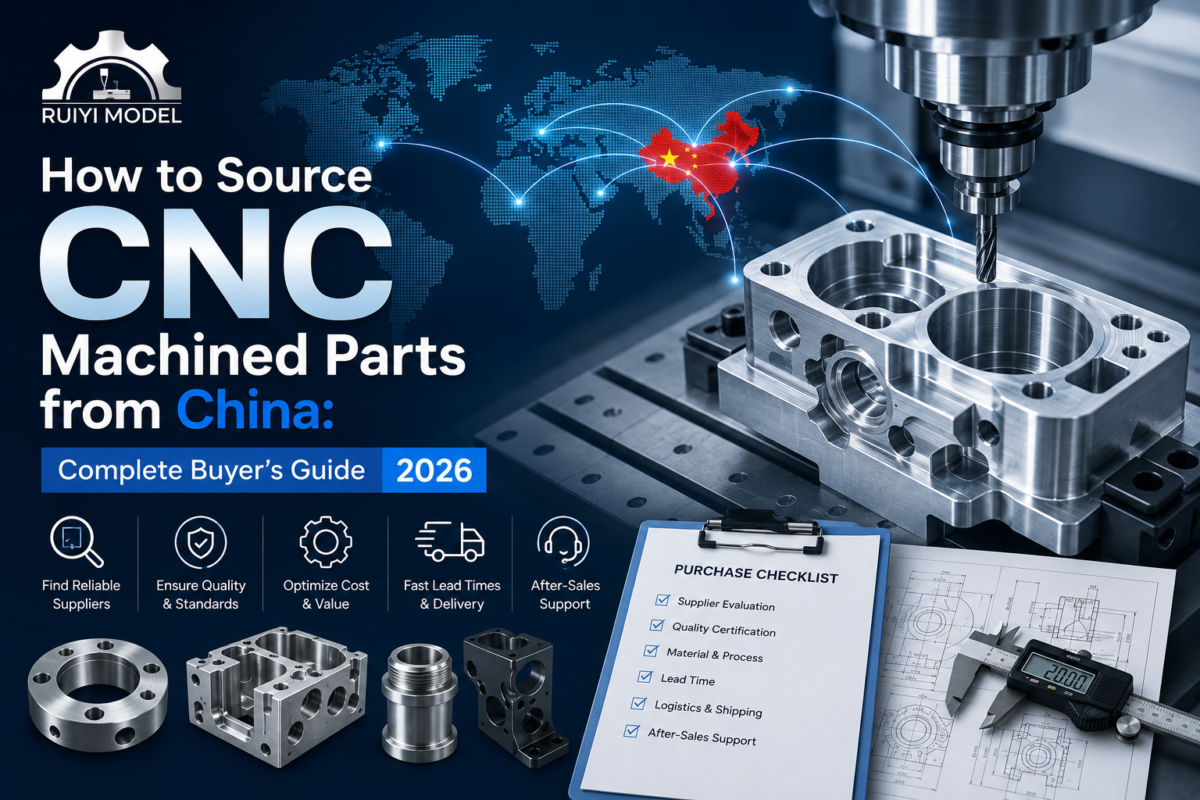
Every year, thousands of procurement managers, product designers, and engineering teams send their first RFQ to a Chinese CNC machining supplier. Some have outstanding results: quality parts delivered on time, at 40 to 60% lower cost than local alternatives, and with documentation that satisfies even their most demanding customers. Others struggle with missed tolerances, late shipments, communication breakdowns, and rework cycles that erode every dollar of savings.
The difference between these two outcomes is almost never about luck. It comes down to how systematically a buyer approaches supplier selection, design preparation, quality specification, and relationship management. This guide walks through every stage of that process, drawing on 2026 market realities and the practical experience of experienced international sourcing teams.
| Did You Know?According to the Haizol China CNC Machining Industry Report 2026, which analysed 60 live RFQs from international buyers generating 1,118 competitive supplier quotes, China currently represents the world’s largest CNC machining market and is expected to reach USD 14.37 billion in machining services revenue by 2030. Prototype orders (1 to 5 units) attracted the highest competitive intensity, averaging 18.7 supplier quotes per RFQ. For international buyers, this means competition among Chinese suppliers directly translates into better pricing, faster turnaround, and higher willingness to accommodate customisation. |
Why Manufacturers Source CNC Parts from China in 2026
The decision to source CNC machined parts from China is no longer primarily a cost decision. It is a capability decision. China’s machining ecosystem in 2026 offers:
- Cost savings of 40 to 60% compared with equivalent ISO 9001-certified output from US or Western European suppliers
- Multi-axis capability with 3-axis, 4-axis, and 5-axis CNC machining centres widely available across all major industrial clusters
- Tight tolerance capability with leading suppliers routinely achieving plus or minus 0.01 mm and specialist shops reaching plus or minus 0.002 mm for semiconductor and aerospace applications
- Integrated secondary processes including sheet metal fabrication, die casting, injection moulding, surface treatment, and assembly under one roof
- Short prototype lead times with standard CNC prototypes delivered in 3 to 7 business days at most quality-certified shops
China’s industrial clusters in Shenzhen, Dongguan, Suzhou, Ningbo, and Chengdu have developed dense supplier ecosystems where precision machining, raw material supply, surface treatment, and logistics infrastructure exist within a single geographic area. This concentration dramatically reduces coordination friction and delivery timelines compared with sourcing across multiple countries.
Step 1: Define Your Requirements Precisely Before Searching
The most common mistake buyers make when approaching Chinese CNC suppliers for the first time is beginning the search before their requirements are fully defined. Vague enquiries produce vague quotes, and vague quotes produce budget overruns when the real scope becomes clear during production.
Before approaching any supplier, prepare the following:
Technical Package
- 3D CAD model in STEP or IGES format (STEP is preferred by most Chinese CNC suppliers)
- 2D engineering drawing with all critical tolerances, datums, and surface finish specifications called out explicitly
- Material specification including alloy grade and temper (for example, aluminium 6061-T6, not just aluminium)
- Surface treatment specification including process type, colour, and any masking requirements
- Quantity and intended use (prototype for validation, pilot run, production order)
Quality Requirements
- Dimensional inspection standard (for example, CMM inspection on all critical dimensions, or visual and dimensional spot check only)
- Required certifications (ISO 9001 minimum for most applications, IATF 16949 for automotive, AS9100 for aerospace, ISO 13485 for medical devices)
- Documentation requirements (material certificates, inspection reports, first article inspection report if required)
Having a complete technical package before issuing your first RFQ reduces quote response time from days to hours, reduces price variability across suppliers, and eliminates the most common cause of production errors: ambiguous drawing interpretation.
Step 2: Identify and Qualify Suppliers
China has thousands of CNC machining factories. The challenge is not finding a supplier. The challenge is finding a supplier whose actual production capability matches their marketing claims and whose quality systems will reliably protect your interests.
Where to Find Reputable Chinese CNC Suppliers
- Direct referral from another manufacturer or engineer who has successfully sourced from China is the highest-reliability method. Ask specifically about quality consistency over multiple orders, not just the first one.
- Trade platforms such as Made-in-China.com and Global Sources allow filtering by certification (ISO 9001, IATF 16949), production capability, and minimum order quantity. Always verify certifications independently.
- Industry exhibitions including the China International Machine Tool Show (CIMT) and the Metalworking and CNC Machine Tool Exhibition (MWCS) in Shanghai provide direct access to hundreds of vetted suppliers in one location.
- Digital manufacturing platforms that operate their own facilities or partner networks provide faster quoting and standardised quality documentation, though typically at a modest premium over direct factory pricing.
Minimum Qualification Criteria
Before requesting a formal quote, confirm the following with any supplier under consideration:
- Valid ISO 9001 certificate (request the PDF and verify the issuing body independently)
- Demonstrated capability in your material and process type (ask for sample parts or case studies)
- Inspection equipment on-site (CMM, surface roughness tester, optical comparator appropriate to your tolerance requirements)
- English-language communication capability sufficient for technical discussions (drawing interpretation, tolerance clarification)
- References from existing international customers in a similar industry
Industry data from 2026 confirms that for aerospace and automotive-grade work, ISO 9001 alone is insufficient. Buyers sourcing safety-critical components should require IATF 16949 for automotive applications or AS9100D for aerospace. These certifications require far more rigorous process control, corrective action systems, and supplier management than the base ISO 9001 framework.
Step 3: Issue a Well-Structured RFQ
An RFQ (Request for Quotation) that includes your full technical package, a clear statement of quantity and delivery requirement, and your quality documentation expectations will produce quotes that are accurate, comparable, and actionable. An RFQ that is vague will produce quotes that are essentially guesses.
Send your RFQ to three to five qualified suppliers simultaneously. This gives you a meaningful price comparison baseline and helps identify outliers in either direction. A quote significantly lower than the market average warrants investigation into why, not automatic acceptance. A quote significantly higher may indicate a supplier who has correctly identified manufacturing complexity that others have missed.
Step 4: Evaluate and Select Your Supplier
Price is one input into supplier selection, not the only one. The table below shows the complete evaluation framework that experienced sourcing managers use when assessing Chinese CNC suppliers.
| Evaluation Criterion | Why It Matters | How to Verify |
|---|---|---|
| Technical capability | Can they actually make your part? | Request sample or reference parts from comparable previous projects |
| Quality certifications | Systemic process control, not just good intent | Request certificate PDF; verify issuing body directly |
| Inspection equipment | Ability to verify output against your specs | Ask for equipment list; request CMM report on sample part |
| Communication quality | Engineering clarity prevents errors | Test with a technical question about your drawing before ordering |
| Lead time reliability | Missed delivery is as costly as bad quality | Ask for on-time delivery data from last 6 months; check references |
| Financial stability | Low risk of mid-production shutdown | Prefer factories operating 5+ years with documented customer history |
| IP and NDA compliance | Protects your design before production | Request NNN agreement (stronger than standard NDA in China) |
Step 5: Protect Your Intellectual Property
IP protection is one of the most frequently cited concerns among international buyers considering China for the first time. The risk is real but manageable with the correct legal and operational precautions.
- Use a Non-Disclosure and Non-Use and Non-Circumvention (NNN) agreement rather than a standard Western NDA. Chinese courts enforce NNN agreements more reliably than foreign NDA templates because NNN agreements are drafted to conform to Chinese contract law.
- Register your key designs and trademarks in China before sharing designs with any supplier. China operates a first-to-file system, which means registering domestically before sharing designs prevents potential misappropriation.
- Segment your technical package when working with multiple suppliers. Share only the information each supplier needs to produce their portion of the assembly.
- Conduct IP audits with a China-based IP attorney before committing significant tooling investment to a new supplier relationship.
Step 6: Manage Quality Across the Production Cycle
Quality management in Chinese CNC sourcing is not a one-time activity. It is an ongoing process that spans pre-production, in-process, and post-production stages.
Pre-Production
- Request a First Article Inspection (FAI) on the first production part before approving full batch production. An FAI report documents dimensional verification against your drawing for every critical feature.
- Conduct a DFM (Design for Manufacturability) review with your supplier before cutting starts. This catches ambiguous features, tolerance stack-up problems, and any tool access issues that would cause production delays or non-conformances.
In-Process
- Define inspection hold points in your purchase order. For example, require dimensional inspection at 10% of batch quantity before the full run continues.
- For high-value or safety-critical parts, consider appointing a third-party inspection service (such as QIMA, Bureau Veritas, or SGS) to conduct in-process and pre-shipment inspection at the factory.
- Request photographs of in-process set-up and key machining operations. Reputable suppliers will provide these without hesitation.
Post-Production and Incoming Inspection
- Define your incoming inspection protocol before parts arrive. For low-risk cosmetic parts, visual inspection and dimensional sampling may be sufficient. For precision or safety-critical parts, 100% CMM verification on critical dimensions is appropriate.
- Establish a clear non-conformance (NCR) process in advance. Know the supplier’s response time commitment for NCR investigation, root cause analysis, and corrective action.
Step 7: Manage Logistics, Lead Times, and Total Cost
The total cost of sourcing from China extends well beyond the per-part price. Calculating the true total landed cost requires including all of the following:
| Cost Element | Typical Range | Notes |
|---|---|---|
| Per-part machining price | 40-60% lower than Western suppliers | Baseline cost advantage |
| International air freight | $5 to $15 per kg | For prototypes and urgent orders |
| Sea freight (full container) | $1,500 to $4,000 per 20ft container | Most cost-effective for production volumes |
| Import duties and tariffs | Variable by country and HS code | Verify current rates; subject to trade policy changes |
| Third-party inspection | $200 to $500 per inspection day | Recommended for new suppliers and critical parts |
| Currency exchange risk | Variable | Consider forward contracts for large orders |
| Inventory carrying cost | Depends on order size | Larger orders save per-part cost but increase inventory cost |
The most common mistake in total landed cost calculation is ignoring import duties and currency risk. Both can erode the cost advantage of China sourcing significantly for buyers in certain markets. Verify current tariff schedules with a customs broker before committing to a sourcing strategy.
For prototypes and urgent small batches, international air freight from China to Europe or North America typically costs $5 to $15 per kilogram and delivers within 3 to 7 business days. For production volumes, sea freight from major Chinese ports (Shenzhen, Shanghai, Ningbo) to European or North American destinations typically takes 18 to 32 days and costs a fraction of the air freight equivalent.
| Did You Know?According to the JXD Machining China CNC Outsourcing Guide 2026, buyers who calculate Total Cost of Ownership (TCO) rather than per-part price typically find that sourcing from certified Chinese CNC suppliers delivers 30 to 50% net savings even after including logistics, tariffs, third-party inspection, and currency hedging. The key variables are tariff rates (which vary significantly by country and HS code), freight mode, and the supplier’s ability to provide quality documentation that eliminates redundant incoming inspection at the buyer’s facility. |
Common Mistakes to Avoid
- Choosing the lowest quote without verifying capability. A quote that is 30% below the market average is almost always missing something: setup cost, inspection cost, or an assumption about tolerances that does not match your drawing.
- Sending 2D drawings without a 3D STEP file. Ambiguous 2D drawings are the single largest source of dimensional non-conformances in China CNC sourcing. Always provide a STEP file.
- Skipping the First Article Inspection. Approving a batch of 500 parts without verifying the first piece is how buyers end up with 500 non-conforming parts.
- Over-tightening tolerances unnecessarily. Every tolerance tighter than required adds cost without adding function. Review tolerances critically before issuing a drawing.
- Treating China sourcing as a one-time transaction. The best results come from investing in a supplier relationship over multiple orders. Suppliers prioritise consistent customers for capacity, responsiveness, and pricing.
- Using a standard Western NDA instead of an NNN agreement. Standard NDAs are largely unenforceable in Chinese courts. A China-specific NNN agreement provides meaningful legal protection.
Frequently Asked Questions
Q1. What is the typical lead time for CNC machined parts from China?
For standard prototypes (1 to 5 units) with clear technical documentation, most quality-certified Chinese CNC suppliers can deliver within 5 to 10 business days including air freight to Europe or North America. For production batches of 50 to 500 units with standard tolerances, typical manufacturing lead time is 10 to 20 business days, plus 4 to 7 days air freight or 20 to 30 days sea freight.
Q2. What quality certifications should I require from a Chinese CNC supplier?
ISO 9001 is the minimum acceptable certification for any serious production work. For automotive components, require IATF 16949. For aerospace components, require AS9100D. For medical device components, require ISO 13485. In all cases, request the actual certificate PDF and verify the issuing certification body independently to confirm the certification is current and legitimate.
Q3. How do I protect my design when working with Chinese suppliers?
Use a Non-Disclosure, Non-Use and Non-Circumvention (NNN) agreement drafted under Chinese contract law before sharing any design files. Register your key intellectual property in China before disclosure. Consider splitting your technical package so that no single supplier has complete system-level visibility into your product if competitive sensitivity is high.
Q4. Is it safe to send my CAD files to a Chinese supplier I have never worked with?
Yes, with appropriate precautions. Use a watermarked version of your drawing with your company name and date clearly visible. Share files via a tracked delivery method so you have documentation of disclosure. Require a signed NNN agreement before sending any files. Many thousands of successful sourcing relationships with Chinese CNC suppliers are built on exactly this basis every year.
Q5. Can Chinese CNC suppliers handle very small orders?
Yes. China is the most competitive market in the world for prototype quantities (1 to 5 units), with suppliers competing actively for single-unit orders. The per-part cost will be higher than for production volumes because setup cost is fixed, but Chinese suppliers consistently offer lower prototype pricing than Western alternatives for equivalent quality.
Q6. How do I know if a Chinese supplier’s ISO 9001 certificate is genuine?
Request the certificate PDF including the certificate number, issuing certification body name, scope of certification, and expiry date. Search the issuing body’s website directly (not through a link the supplier sends you) for a certificate verification tool. Major legitimate issuing bodies include Bureau Veritas, TUV SUD, SGS, Lloyd’s Register, and DNV GL.
Q7. What file formats do Chinese CNC suppliers typically accept?
STEP (.stp or .step) is the universal standard and accepted by virtually all Chinese CNC shops. IGES (.igs) is also widely accepted. For drawings, PDF is universal; DWG/DXF is also commonly used. Parasolid (.x_t) and SolidWorks native (.sldprt) files are accepted by many larger suppliers. Always include a PDF drawing alongside your 3D model regardless of format.
Q8. What should a complete purchase order to a Chinese CNC supplier include?
A complete purchase order should include: the part number and revision, the 3D STEP file and PDF drawing, material specification with alloy grade and condition, surface treatment specification, quantity, required delivery date, inspection and documentation requirements (CMM report, material certificate, FAI if required), packaging requirements, and shipping method and Incoterms. Spelling all of this out in the purchase order rather than relying on verbal agreements is the single most effective protection against misunderstandings.

Solomon Yang is a manufacturing industry professional with extensive experience in electronic, mechanical, and industrial component manufacturing. Having held various positions in American and Taiwanese manufacturing companies, he has developed a comprehensive understanding of manufacturing processes, production management, quality control, and global supply chain operations.
With expertise in business development, sales operations, international trade, customer relationship management, and engineering project support, Solomon bridges technical knowledge with commercial strategy to deliver innovative and cost-effective manufacturing solutions. He is passionate about advanced manufacturing technologies, process improvement, and continuous professional growth, with a strong commitment to creating value for customers and partners worldwide.