China is the better choice for CNC machining Parts Manufacturing when you need tight tolerances (±0.005–0.01 mm), advanced materials like titanium, fast lead times, and full OEM documentation. Vietnam is a reasonable option for simple, standard-material parts or when you need to diversify your supply chain across countries. Most precision buyers still choose China as their primary CNC machining supplier such as “Ruiyi industrial manufacturer” because of its deeper supply chain, broader material range, and shorter CNC machining lead times.
Introduction
Choosing between CNC machining in China and Vietnam is one of the most common sourcing decisions facing global buyers today. Both countries have built strong manufacturing reputations over the past two decades, and both offer competitive CNC machining costs compared to North American or European alternatives. But the details matter a great deal: precision tolerances, material availability, lead times, quality certifications, and long-term supply chain reliability can vary significantly between the two destinations.
This guide gives you a clear, fact-based comparison of CNC machining China vs Vietnam across every factor that influences a buying decision. Whether you are looking for a custom CNC machining partner for a prototype run or a reliable CNC machining supplier for ongoing production, the analysis below will help you make the right call.
Expert Recommendation:
Choose China for precision CNC machining, tight tolerances, advanced materials, and fast lead times. Choose Vietnam for simple parts and supply chain diversification.
Key Takeaways
- China typically delivers tighter tolerances (±0.005 mm vs ±0.02 mm in Vietnam) and a wider range of materials, including titanium alloy.
- Lead times in China run 7–20 days (3–5 days rush); Vietnam’s standard lead time is 10–30 days.
- China’s integrated supply chain keeps all-in CNC machining cost competitive once materials, tooling, and surface treatment are factored in — not just labour rates.
- Vietnam is best suited to simple, standard-material parts and supply chain diversification strategies, not high-precision or exotic-material production.
- Always request a first-article sample and a written CNC machining quote before committing to volume production in either country.
| Did You Know?Asia-Pacific accounts for roughly 55.7% of the entire global CNC machine market, with China alone representing the largest single share of that regional output — a scale advantage that directly supports China’s shorter lead times and deeper material availability compared with smaller manufacturing hubs like Vietnam. (Source: Fortune Business Insights) |
CNC Machining China vs Vietnam: At a Glance
The table below summarises the key differences between choosing a CNC machining manufacturer in China versus Vietnam. Detailed explanations follow each section.
| Factor | CNC Machining China | CNC Machining Vietnam |
| Machining Cost | Low to very low; mature supplier ecosystem drives competitive pricing | Slightly lower labour cost per hour, but total project cost can be similar or higher due to smaller supply chains |
| Lead Time | 7-20 days typical; 3-5 days rush available from established shops | 10-30 days typical; fewer express options |
| Machine Technology | World-class 3-axis, 4-axis, and 5-axis CNC centres; latest Japanese, German, and domestic machines | Mostly 3-axis; 5-axis availability limited to a smaller number of specialised shops |
| Material Variety | Aluminium, stainless steel, titanium alloy, copper, engineering plastics, and more | Aluminium and mild steel dominate; titanium and exotic alloys harder to source locally |
| Tolerances | ±0.005 mm achievable; ISO 2768-fine standard across top-tier suppliers | ±0.02 mm typical; tighter tolerances require premium shops with longer lead times |
| Certifications | ISO 9001, IATF 16949, AS9100 widely available | ISO 9001 present at leading factories; IATF and AS9100 less common |
| Supply Chain | Deep, integrated: raw materials, surface treatment, and assembly all within hours | Less integrated; some materials and surface finishes must be imported from China or elsewhere |
| Language / Communication | English-speaking export teams standard in established facilities | Good English at professional shops; less consistent across the broader market |
| IP and IP Protection | Improving; reputable manufacturers sign NDA and maintain strict factory controls | Generally improving; similar concerns apply as with any low-cost country |
| Minimum Order Quantity | Flexible: prototypes from 1 piece to high-volume production runs | Flexible but smaller suppliers may require higher MOQ to be economical |
1. Industry Scale and Manufacturing Depth
CNC Machining in China
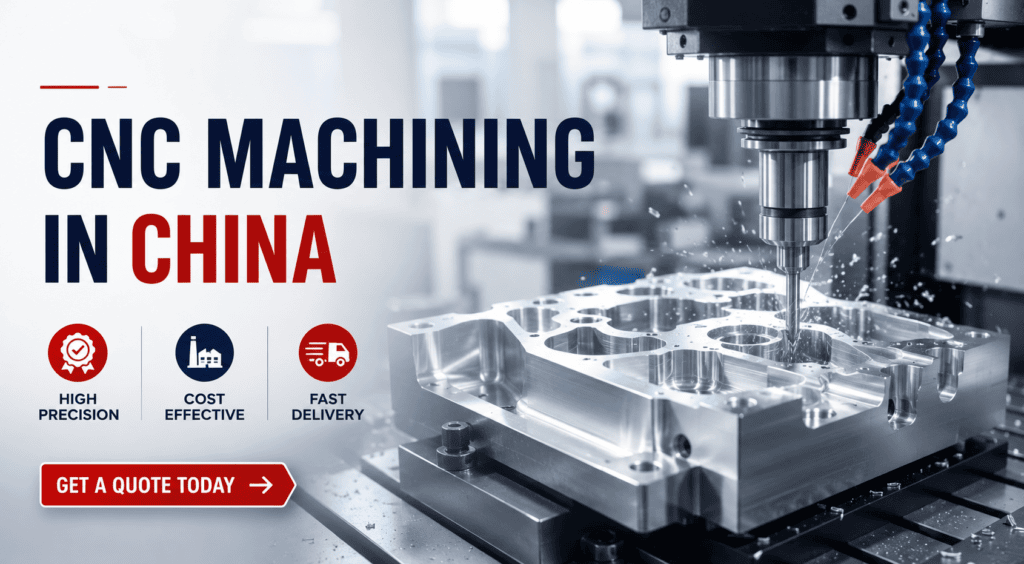
China’s machining sector is simply without peer in terms of breadth. Decades of investment in advanced tooling, automated machining centres, and a dense cluster of supporting industries mean that a buyer can source raw aluminium billet, CNC milling, anodising, and assembly from suppliers located within the same industrial park. This integrated supply chain is one of the primary reasons that CNC machining outsourcing in China continues to grow, even as labour costs have risen.
CNC Machining in Vietnam
Vietnam has made significant strides since the early 2010s, attracting foreign direct investment from Japanese, South Korean, and Taiwanese manufacturers that brought modern CNC equipment with them. The country now has legitimate precision machining capacity, particularly in and around Hanoi and Ho Chi Minh City.
That said, Vietnam’s machining sector is still maturing. The number of shops capable of 5-axis work, tight tolerances, and exotic materials is smaller than in China’s Guangdong or Yangtze River Delta clusters. For buyers whose parts require deep supply-chain integration, China vs Vietnam manufacturing comparisons tend to favour China’s head start.
2. CNC Machining Cost China vs Vietnam
CNC machining price comparisons between the two countries are nuanced. Vietnam’s average hourly labour cost is lower than China’s, which on paper looks attractive. However, CNC machining cost is never just labour. It includes:
- Machine depreciation and energy costs
- Raw material prices and local availability
- Tooling costs and replacement cycles
- Quality control overhead
- Logistics and freight charges
Because China’s supply chain for metals, tooling, and ancillary services is so well developed, raw material and tooling costs are often lower than in Vietnam, where some inputs must be imported. The net result is that when buyers request a CNC machining quote from both countries, the all-in price difference is frequently smaller than expected, and sometimes favours China on a landed-cost basis.
For high-volume, simple parts where labour is the dominant cost driver, Vietnam can be marginally cheaper. For precision machining of complex geometries or advanced alloys, the cost advantage often disappears or reverses once rework, shipping, and quality holdbacks are factored in.
3. Precision CNC Machining: Tolerances and Quality Standards
1. What ‘Precision’ Actually Means in Practice
When engineers refer to precision CNC machining, they typically mean holding positional tolerances in the range of ±0.005 mm to ±0.01 mm, achieving surface finishes of Ra 0.8 or better, and maintaining consistency across a production batch. These standards are achievable in both China and Vietnam, but the range of suppliers capable of meeting them differs considerably.
2. China’s Precision Advantage
Top-tier Chinese machine shops operate Haas, DMG Mori, Mazak, and Fanuc-equipped machining centres alongside domestically developed 5-axis platforms. Many have invested in in-process measurement systems and CMM inspection rooms. The result is that precision CNC machining in China is available from a large pool of certified suppliers, not just a handful of premium shops.
Quality certifications including ISO 9001, IATF 16949 (automotive), and AS9100 (aerospace) are common among Chinese exporters who have served demanding Western OEM customers for years.
For a technical perspective on how machining precision is achieved and verified, see: .
Vietnam’s Quality Trajectory
Vietnam’s better-equipped factories can match Chinese standards on straightforward 3-axis milling and turning. Where gaps appear is in complex multi-axis work, very tight tolerances on difficult materials such as titanium alloy, and the depth of metrology equipment available for full-batch inspection. Buyers should request sample parts and third-party inspection reports before committing large production orders to a Vietnamese supplier.
4. Material Availability: Aluminium, Stainless Steel, Titanium, and More.
China produces and processes virtually every engineering material used in CNC machining: 6061 and 7075 aluminium alloys, 304 and 316 stainless steel, titanium grade 5 (Ti-6Al-4V), copper, brass, engineering nylons, and PEEK. Lead times for material procurement are short because domestic production and trading networks are well established.
5. CNC Machining Lead Time: Getting Parts Faster
Lead time is one of the most practical considerations when choosing between China vs Vietnam manufacturing. The difference becomes especially significant during new product development cycles or when supply chain disruptions require rapid response.
A typical CNC machining lead time in China for a batch of machined prototypes runs 7 to 14 calendar days from drawing approval to parts shipped. Established shops with dedicated project management and in-house surface treatment can deliver straightforward parts in 3 to 5 business days.
In Vietnam, standard lead times for comparable work run 10 to 30 days. The longer range reflects variability in supplier capabilities and the need to source some materials or surface treatment services from third parties. Buyers with tight deadlines often find it easier to work with a Chinese supplier who can compress timelines without sacrificing quality.
6. China vs Vietnam Supply Chain Resilience
The COVID-19 pandemic prompted many multinational buyers to question single-country sourcing strategies, and Vietnam benefited from this shift. Some companies moved final assembly or light manufacturing to Vietnam as a hedge against concentration risk in China. That trend is real, and it has helped build Vietnam’s industrial infrastructure.
However, supply chain resilience is about more than geography. It also depends on a supplier’s financial stability, their depth of equipment, and their ability to scale or pivot when unexpected demand changes occur. On all three dimensions, the larger and more established Chinese machining sector generally offers more options.
A practical hybrid approach used by many experienced buyers is to qualify a primary CNC machining supplier in China for volume production while developing a secondary relationship with a Vietnamese shop for risk mitigation or cost benchmarking. This captures the best of both markets without over-committing to either.
7. CNC Machining Outsourcing: How to Choose the Right Country
When China Is the Right Choice
Choosing CNC machining outsourcing in China makes the most sense when:
- Your parts require tight tolerances (±0.01 mm or better) consistently across large batches
- You need a wide selection of materials including titanium, tool steels, or advanced engineering plastics
- Short lead times are critical to your product development or production schedule
- You need OEM CNC machining with full quality documentation such as PPAP, ISIR, or FAI
- You want access to integrated value-added services including anodising, electroplating, powder coating, or assembly under one roof
- Your order requires certifications such as IATF 16949 or AS9100
When Vietnam Is Worth Considering
CNC machining outsourcing in Vietnam is worth exploring when:
- Your parts are relatively simple geometrically and tolerances are moderate (±0.02 mm or wider)
- You need to diversify your sourcing beyond a single country for strategic risk management
- Standard aluminium or steel parts represent the bulk of your requirements
- You are sourcing other manufacturing in Vietnam and want to consolidate logistics
How to Choose a CNC Machining Supplier Regardless of Country
Whether you select China or Vietnam, the supplier selection process should follow the same rigorous steps:
- Request a factory audit report or visit the facility in person (or via video)
- Ask for material certifications and inspection reports for a recent comparable job
- Submit a first-article order before committing to volume production
- Review NDA policies and understand how intellectual property is protected on the factory floor
- Confirm the supplier’s payment terms, logistics capability, and after-sales support process
8. OEM CNC Machining and Custom CNC Machining: Which Country Delivers?
China leads on both fronts at volume. The largest Chinese CNC machining factories serve aerospace, automotive, medical, and consumer electronics OEMs and have spent years building the systems those customers require. Traceability documents, first-article inspection reports, and statistical process control are standard offerings from these factories.
Vietnam’s OEM capability is growing but is currently strongest in industries where Japanese and South Korean parent companies have transferred their quality systems to local factories. For Western buyers expecting the full suite of OEM documentation and systems, China remains the safer default choice unless a specific Vietnamese supplier has demonstrably met those requirements for a similar customer.
9. Surface Treatment and Post-Processing Availability
CNC-machined parts frequently need surface treatment: anodising for aluminium, electroplating, powder coating, passivation, sandblasting, or painting. China’s machining clusters almost always have specialised surface treatment suppliers nearby, making it straightforward to source complete finished parts from a single region.
10. Communication, Culture, and Buyer Experience
Working effectively with an overseas supplier depends heavily on communication quality. Chinese machining exporters who actively target Western buyers typically have English-speaking technical sales teams capable of reviewing drawings, suggesting design-for-manufacturability improvements, and providing detailed quotations. This has been the case in China’s export manufacturing sector for decades.
Vietnam’s exporting factories are building similar capabilities, but the pool of experienced English-speaking technical staff is smaller at present. Buyers who have worked with Chinese suppliers for years often notice a steeper relationship-building curve when switching to Vietnamese sources.
Time zones also differ slightly: most of China is UTC+8 while Vietnam is UTC+7, meaning communication windows with European or North American buyers are similar.
11. Intellectual Property Considerations
IP protection is a concern in both countries. China has made measurable improvements to its IP regime over the past decade, particularly for companies working with established, audited factories that serve Western OEMs. Practical precautions include working with suppliers who have signed NDAs, avoiding sharing complete assembly drawings on first contact, and using design-splitting strategies for sensitive components.
Vietnam faces similar questions. Neither country provides automatic IP protection at the level buyers might expect in Germany or Japan. In both cases, the quality of your legal agreements and your choice of a reputable, reference-checkable supplier matters far more than geography alone.
12. High-Speed Cutting and Advanced Machining Technologies
For parts that demand the most advanced machining techniques, including high-speed cutting of hardened steels or complex 5-axis contouring, the technology gap between China and Vietnam is currently significant. China’s leading machining shops have invested in the latest spindle technologies, high-speed CAM software, and trained operators who understand advanced cutting strategies.
Vietnam’s better-equipped factories can execute high-speed work on aluminium alloys competently, but comparable capability on difficult materials or highly complex geometries requires careful supplier selection and often longer lead times.
13. The Verdict: Which Is Better for Your Project?
There is no single answer to which country is better for CNC machining, because the right choice depends entirely on your specific requirements. The clearest guidance is:
- Choose a CNC machining supplier in China if: precision, material breadth, short lead times, certification depth, integrated surface treatment, or OEM documentation requirements are important factors.
- Consider CNC machining in Vietnam if: you are sourcing simple standard-material parts, you need supply chain diversification, or you have already established other manufacturing relationships in Vietnam.
For most buyers sourcing precision machined components globally, China remains the first-choice destination because its combination of machining capability, supply chain depth, and export experience is difficult to match. Vietnam is a genuine alternative for simpler work and risk-diversification strategies, but it is not yet a like-for-like substitute for demanding precision applications.
Why Global Buyers Choose Ruiyi for CNC Machining?
Choosing the right CNC machining supplier is about more than price. You need a manufacturing partner that can consistently deliver precision, quality, and reliable lead times.
Ruiyi Industrial Manufacturer combines advanced CNC machining capabilities with a customer-focused approach to help global buyers reduce risk and improve project outcomes.
What Sets Ruiyi Apart?
- High Precision Machining – Tolerances as tight as ±0.005 mm for demanding applications.
- Advanced CNC Capabilities – 3-axis, 4-axis, and 5-axis CNC machining for complex geometries.
- Wide Material Selection – Aluminum, stainless steel, titanium, brass, copper, PEEK, Delrin, and other engineering plastics.
- Fast Lead Times – Rapid prototyping and production scheduling to support urgent projects.
- Strict Quality Control – Comprehensive inspection processes and detailed quality documentation.
- OEM & Custom Manufacturing – From prototype development to full-scale production.
- Engineering Support – Design for Manufacturability (DFM) feedback to improve quality and reduce costs.
- Global Export Experience – Supporting customers across North America, Europe, Australia, and other international markets.
Whether you need precision prototypes, low-volume production, or complex CNC machined components, Ruiyi provides the manufacturing expertise and reliability required for successful outsourcing projects.
Need a quote? Upload your drawings today for a fast, competitive CNC machining quotation and expert engineering review.
14. How to Get a CNC Machining Quote and Evaluate It
- Full 2D drawings with GD&T callouts and any critical tolerance specifications
- 3D CAD files in STEP or IGES format
- Material specification including alloy grade and temper
- Required surface finish (Ra value or named treatment)
- Batch quantity and expected annual volume
- Required certifications and documentation
- Target delivery schedule
Request at least two to three quotes and compare not only the unit price but also tooling charges, first-article inspection costs, packaging, and freight to your destination. A lower unit price can quickly be offset by higher shipping costs or quality holdbacks.
Conclusion:
The CNC machining China vs Vietnam debate ultimately comes down to matching your project’s requirements against each country’s real capabilities. China offers an unmatched combination of precision machining depth, material breadth, fast lead times, and integrated supply chains that have made it one of the world’s largest and most developed CNC machining ecosystems. Vietnam offers genuine value for buyers who need supply chain diversification or are sourcing simpler, standard-material parts.
Frequently Asked Questions
Is CNC machining cheaper in China or Vietnam?
China is often more cost-effective for precision CNC machining. While Vietnam has lower labor costs, China’s manufacturing scale, material availability, and supply chain efficiency frequently result in similar or lower total project costs.
Can Vietnamese CNC machining suppliers match Chinese quality?
Yes, for standard 3-axis machining projects. For complex 5-axis parts, tight tolerances, and advanced materials like titanium, China generally offers more experienced suppliers.
How do I find a reliable CNC machining supplier in China?
Choose ISO-certified suppliers with proven export experience, in-house quality control, and positive customer references. Request sample parts before placing large orders.
What is the best country for CNC machining outsourcing?
China is the leading choice for CNC machining outsourcing due to its advanced capabilities, large supplier network, and competitive pricing. Vietnam is a good option for supply chain diversification.
What CNC machining lead times should I expect from China vs Vietnam?
China typically delivers prototype CNC parts within 7–14 days, while Vietnam usually requires 10–30 days for similar projects.
Is supply chain risk lower with Vietnam than China?
Vietnam reduces dependency on a single country, but China generally offers a stronger and more resilient manufacturing ecosystem with greater capacity and material availability.
Can China and Vietnam both handle 5-axis CNC machining?
Yes, both countries offer 5-axis CNC machining services. However, China has a much larger number of experienced 5-axis machining suppliers.
Do I need different tolerances depending on which country I choose?
No. Always specify your required tolerance on the engineering drawing. Top Chinese suppliers can achieve ±0.005 mm, while standard Vietnamese suppliers typically achieve ±0.02 mm.
Further Reading
You may also find these related articles useful:
- How to Calculate CNC Milling Costs
- CNC Machining Process Quality Control
- How to Improve Product Precision by Optimising Machining Processes
- High-Speed Cutting Technology: Status, Advantages and Development Trends
- How to Efficiently Process Titanium Alloy Integral Impellers

Solomon Yang is a manufacturing industry professional with extensive experience in electronic, mechanical, and industrial component manufacturing. Having held various positions in American and Taiwanese manufacturing companies, he has developed a comprehensive understanding of manufacturing processes, production management, quality control, and global supply chain operations.
With expertise in business development, sales operations, international trade, customer relationship management, and engineering project support, Solomon bridges technical knowledge with commercial strategy to deliver innovative and cost-effective manufacturing solutions. He is passionate about advanced manufacturing technologies, process improvement, and continuous professional growth, with a strong commitment to creating value for customers and partners worldwide.