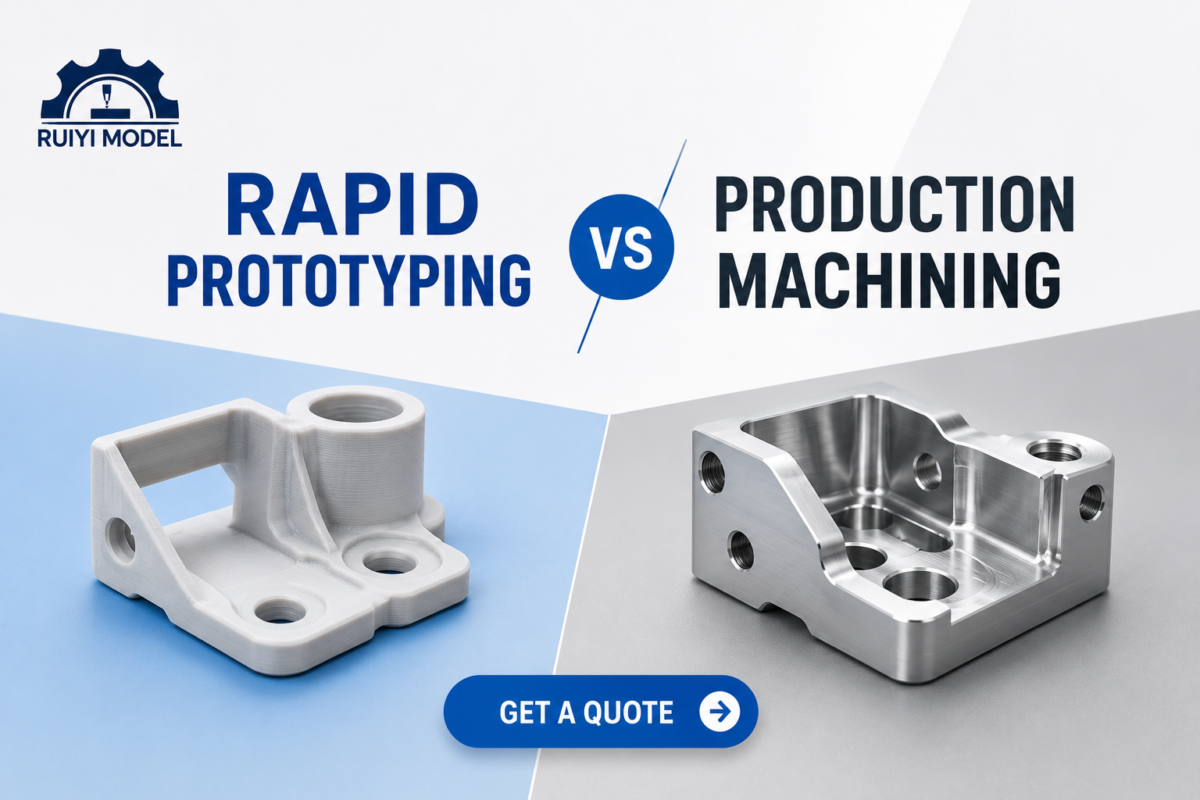
| QUICK ANSWER Rapid prototyping uses CNC machining to produce one or a handful of parts fast, with flexible tolerances and lower setup cost, ideal for design validation. Production machining optimizes for high-volume output with tighter tolerances, dedicated tooling, and lower per-part cost at scale. Choose prototyping to test; choose production machining to manufacture. |
- mostbet-bets.com
- mosbet
- pinap
- pin up casino
- pinup azerbaycan
- pinko casino
- mostbet casino
- chicken road game
- mosbet az
- pin up
- mostbet kz
- 1 vin
- mostbet
- mostbet kz
- mostbet uz online
- pinup az
- pinco slot
- snaibet
- mosbet az
- mostbet
- mosbet casino
- mostbet
- mosbet
- pinap
- mosbet kz
- mostbet
- mosbet az
- mostbet казино
- pin up
- 1 vin
You have a design. You need parts. The question keeping many product managers and engineers up at night is the same one: Do I prototype first, or go straight to production runs?
Get this decision wrong and you either waste money on high-volume tooling for a design that still needs iteration, or you burn weeks ordering single prototypes when you needed 500 units last month. Neither feels good.
This guide breaks down rapid prototyping vs production machining with the specificity engineers and decision-makers actually need, covering tolerances, lead times, costs, materials, and the strategic inflection point where one approach becomes the other.
What Is Rapid Prototyping in CNC?
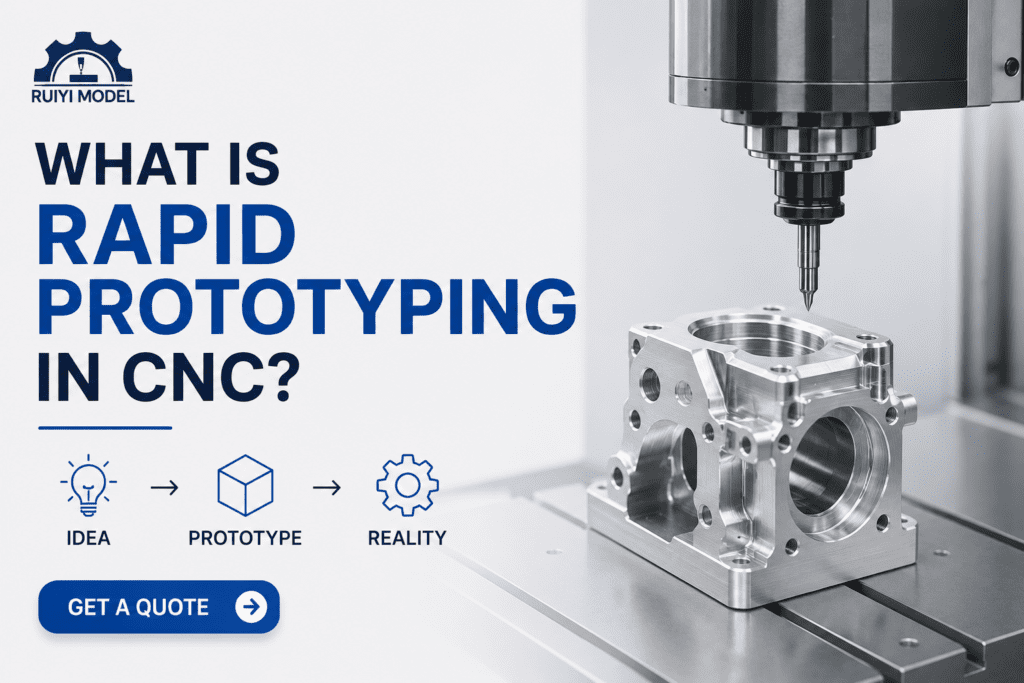
Rapid prototyping refers to the fast manufacturing of a small number of parts, typically one to fifty units, to validate form, fit, function, or manufacturability before committing to full-scale production. In the context of CNC machining, the “rapid” element comes from reduced setup time, standard tooling, and CAM programming that prioritizes speed over per-unit cost optimization.
Rapid CNC prototypes are machined from the same materials as production parts: aluminum, stainless steel, titanium, engineering plastics. This is a critical advantage over 3D-printed prototypes, which often use surrogate materials that do not replicate true mechanical performance.
For a deeper understanding of material options used during prototyping, see our guide on What and Why Materials Are Used for Prototyping.
| DID YOU KNOW?CNC-machined prototypes typically match production-intent material properties within 95%, making them far more reliable for functional testing than FDM or SLA 3D printed parts. |
Key characteristics of rapid prototyping runs:
- Low minimum order quantities (often 1 to 10 parts)
- Short lead times, frequently 3 to 7 business days
- Tolerances typically held to ±0.05mm or as specified, without extreme process optimization
- No dedicated fixtures or custom tooling required
- DFM (Design for Manufacturability) feedback included
What is Production Machining?
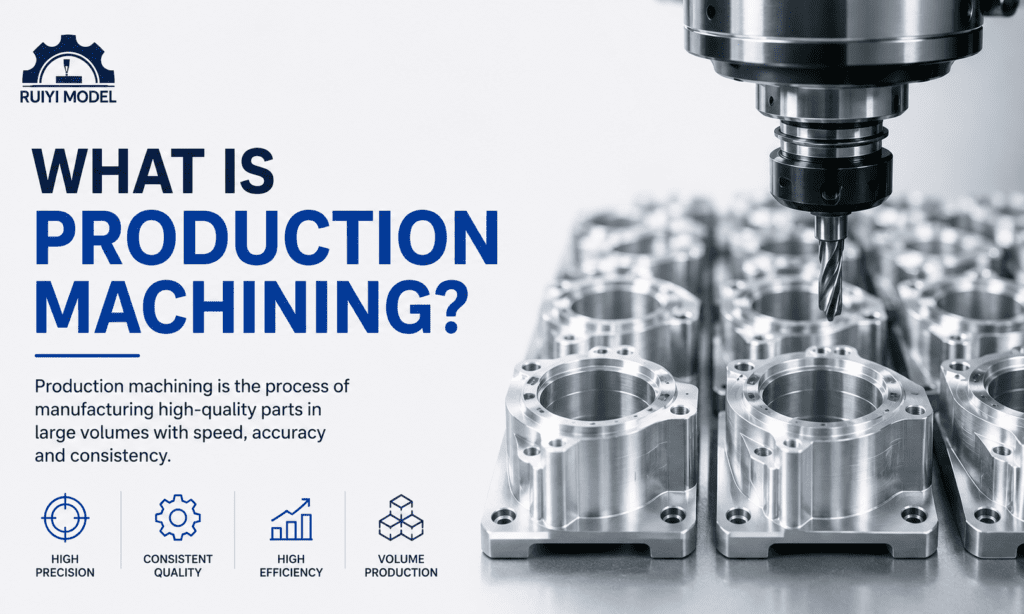
Production machining is optimized for volume. Where prototyping asks “does this design work?”, production machining asks “how do we make 500 of these parts at the lowest verified cost with consistent quality across every unit?”
At this stage, manufacturers invest in dedicated fixtures, custom tooling, optimized cycle times, and statistical process control. The engineering investment is front-loaded to drive down per-unit cost and maximize throughput for repeatable, certified output.
Key characteristics of production machining:
- Minimum quantities typically 50 to 500+ units depending on part complexity
- Tighter tolerances held consistently, supported by SPC and inspection protocols
- Custom fixturing reduces cycle time per part significantly
- Lower per-unit cost, but higher upfront setup investment
Key Differences: Rapid Prototyping vs Production Machining
| Factor | Rapid Prototyping | Production Machining |
| Quantity | 1 to 50 units | 50 to 10,000+ units |
| Lead Time | 3 to 10 business days | 2 to 8 weeks (incl. setup & FAI) |
| Per-Unit Cost | Higher per part | Lower per part at volume |
| Setup Cost | Minimal | Significant (tooling, fixtures) |
| Tolerances | Standard (±0.05 to ±0.1mm) | Tight (<±0.01mm with certification) |
| Design Flexibility | High (changes easy) | Low (changes are costly) |
| Quality Control | Visual + dimensional check | SPC, CMM, FAI, PPAP |
| Surface Finish | As-machined or basic | Full finishing specifications met |
| Best For | Validation, testing, iteration | Certified, repeatable output at scale |
Cost Comparison
Cost is where most teams get burned. The instinct is to look at per-unit price only. That is the wrong lens.
The True Cost Equation
For a hypothetical aluminum bracket (medium complexity, three setups):
| Scenario | Qty | Unit Price | Setup Cost | Total Cost |
| Rapid Prototype | 3 | $220 | $0 | $660 |
| Production Run | 3 | $55 | $1,800 | $1,965 |
| Rapid Prototype | 25 | $190 | $0 | $4,750 |
| Production Run | 25 | $55 | $1,800 | $3,175 |
| Production Run | 100 | $38 | $1,800 | $5,600 |
The crossover point varies by part, but for most machined components it falls somewhere between 20 and 80 units. Below that threshold, rapid prototyping wins on total cost. Above it, production machining takes the lead.
For a detailed breakdown of how machining costs are calculated, read our post on How to Calculate CNC Milling Costs.
| PRO TIPAlways factor design change risk into your cost model. If there is more than a 30% chance you will revise the design after seeing physical parts, prototyping first almost always saves money even for medium volumes. |
When to Choose Rapid Prototyping
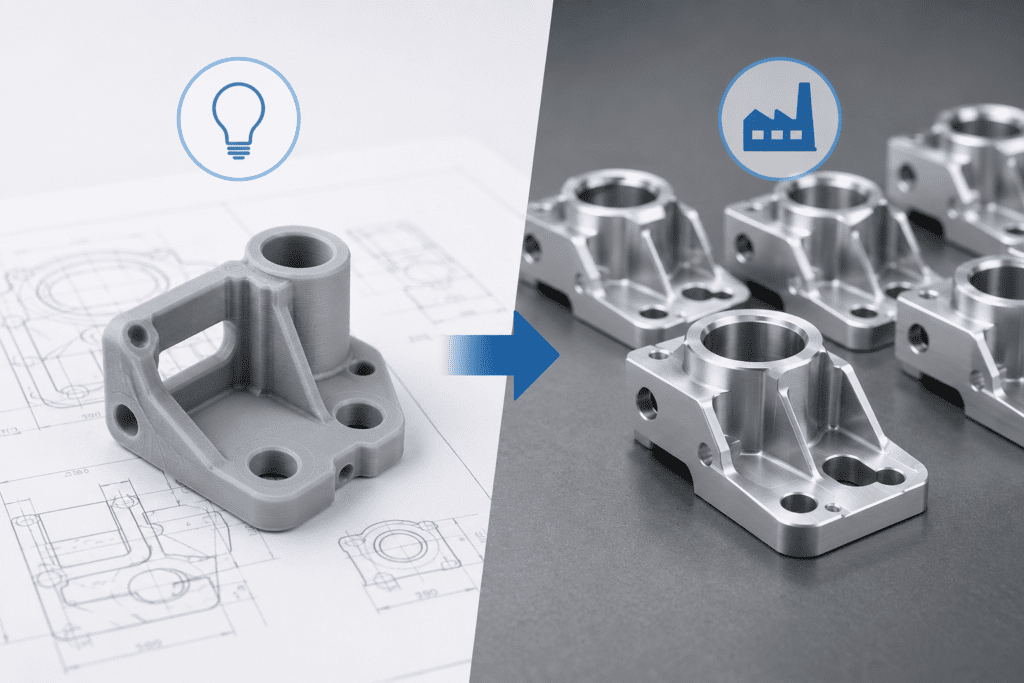
Rapid prototyping is the right call when uncertainty is your biggest variable. Specifically, choose prototyping when:
- Your design is new or unvalidated. No amount of CAD simulation fully replaces a physical part in your hands. Interference fits, ergonomics, and assembly sequence issues surface immediately with real parts.
- You need to move fast. Investor demos, trade shows, and client reviews have hard deadlines. Three CNC prototypes in five days beats waiting eight weeks for production-tooled parts.
- Quantities are below 25 to 50 units. The math rarely supports production tooling investment at low volumes.
- Design changes are likely. If your team is still arguing about wall thickness or feature placement, freeze nothing. Prototype, test, revise.
- You are bridging to a funding milestone. Startup founders regularly use prototype parts to secure seed or Series A funding before committing to production tooling.
When to Choose Production Machining
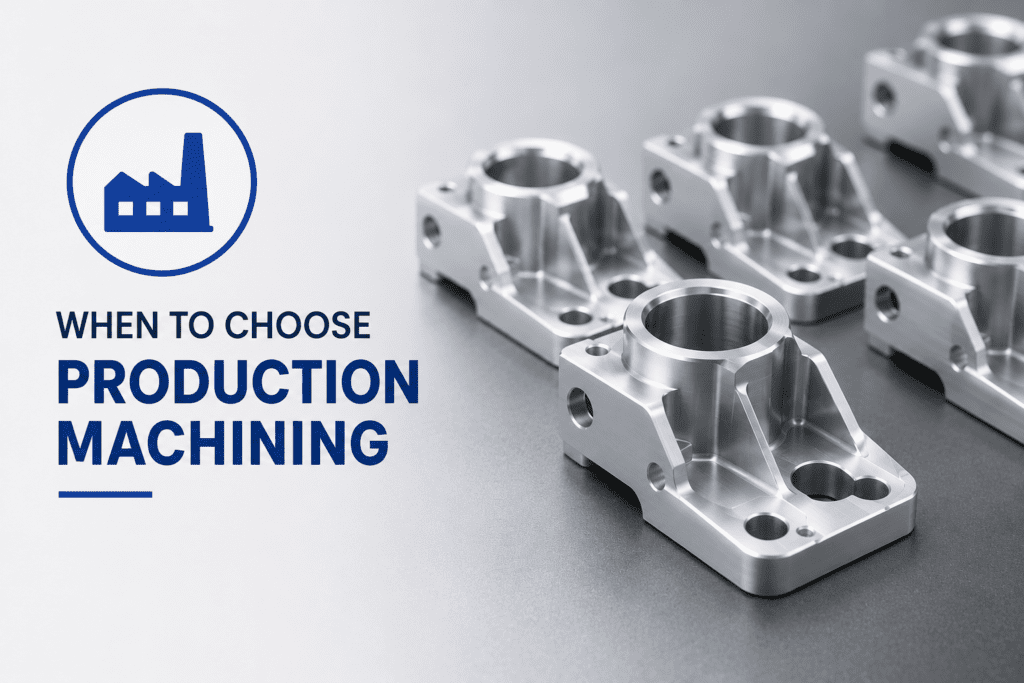
Production machining becomes non-negotiable when you need volume, consistency, and certified quality. Choose production machining when:
- Your design is locked. First article inspection passed, tolerances confirmed, no pending ECOs.
- Volumes exceed your prototype crossover point. Usually 50+ units for simple parts, often 200+ for complex ones.
- Regulatory compliance is required. Aerospace AS9100, medical ISO 13485, automotive IATF 16949, and similar standards require PPAP, SPC, and documented control plans that prototype runs do not provide.
- Per-unit cost directly affects product margin. At production volumes, the tooling investment amortizes and your per-part cost can drop 60 to 80%.
- Surface finish and cosmetic consistency are critical. Production runs include standardized finishing, masking, and inspection that prototype runs cannot economically provide.
See our full guide on optimizing production quality: How to Improve Product Precision by Optimizing Machining Processes.
The Bridge Strategy: Going from Prototype to Production
The best manufacturing strategies do not treat prototyping and production as binary choices. They use a deliberate bridge.
Phase 1: Concept Prototype (1 to 5 units)
Validate your fundamental design concept. Are the dimensions right? Does it assemble? Does it function? This phase is about answering those questions as fast and cheaply as possible.
Phase 2: Engineering Prototype (5 to 25 units)
Test under real-world conditions. Thermal cycling, load testing, fit checks with mating components. Share with internal engineering teams and key customers for feedback. At this stage you may request tighter tolerances on critical features.
Phase 3: Pilot Production (25 to 100 units)
Introduce basic production-intent fixturing. Conduct first article inspection. Identify any manufacturability issues before full tooling investment. This phase reveals hidden production costs.
Phase 4: Full Production
Locked design. Optimized process. Certified quality plan. This is where economies of scale do their work.
DFM review is essential before this transition. Read more: How to Reduce Rework and Increase Competitiveness with DFM.
| EXPERT INSIGHT“Working with clients across automotive, robotics, and consumer hardware over many years, the most common expensive mistake we see is teams skipping Phase 2 and going from concept validation straight to a production tooling order. They save two weeks and then spend three months on ECOs, re-tooling, and scrap. An engineering prototype run that costs $4,000 will routinely prevent a $40,000 production problem. The math is not subtle.” |
| COMMON MISTAKEOrdering production quantities of a design that has only been validated in CAD. Every tolerance stack-up, every threading fit, every surface finish interaction needs physical confirmation before production tooling investment. |
| DID YOU KNOW?According to research published in the Journal of Manufacturing Science and Engineering, companies that implement structured prototype-to-production bridge strategies reduce total product development cost by an average of 23% compared to teams that skip prototype validation stages. |
For more on advances in rapid prototyping technology and its expanding role in modern manufacturing, read our post: Advances and Application Prospects of Rapid Prototyping.
| Key TakeawaysRapid prototyping is faster and more cost-effective for quantities under 25 to 50 units or when design changes are likely.Production machining delivers lower per-unit cost, tighter tolerances, and certified quality at volume, but requires locked designs and setup investment.The true cost comparison must include setup costs, not just per-unit price.A three-phase bridge strategy (concept, engineering, pilot) reduces expensive production rework.Regulatory-compliant industries (aerospace, medical, automotive) require production-grade documentation that prototype runs do not provide.CNC-machined prototypes use production-intent materials, making them more reliable for functional testing than most additive alternatives. |
Conclusion:
Choosing between rapid prototyping and production machining is not simply a question of volume. It is a question of design maturity, cost structure, and risk tolerance. The teams that succeed consistently are those that use rapid CNC prototyping to validate their design rigorously before committing budget to production tooling. By applying the four-phase bridge strategy outlined here, you can move from first idea to certified production with far less rework, scrap, and cost overrun. When you are ready to get started, RuiYi Industrial Manufacture Machining provides both rapid prototype and full production runs with full DFM support at every stage.
Frequently Asked Questions
What is the minimum order quantity for rapid CNC prototyping?
Most CNC machining providers, including RuiYi, accept orders from a single part. There is no minimum quantity for prototype runs. Setup fees may apply for extremely complex parts, but single-unit orders are standard practice.
How much faster is rapid prototyping compared to production machining?
Rapid prototyping typically delivers parts in 3 to 10 business days. Production machining requires additional time for first article inspection, process qualification, and fixture setup, often extending lead time to 3 to 8 weeks for the initial run. Repeat production orders are faster once the process is established.
Can you hold the same tolerances in prototyping as in production?
Yes, CNC prototyping can hit tight tolerances when specified. However, achieving and verifying tolerances below ±0.01mm consistently across large volumes requires process controls, fixtures, and SPC infrastructure that are only justified at production scales. For prototypes, specify only the tolerances critical to function.
Is CNC prototyping better than 3D printing for functional testing?
For functional testing with real materials (aluminum, steel, engineering plastics), CNC machining is superior. 3D printed parts in FDM or SLA materials have anisotropic mechanical properties and different surface characteristics. CNC prototypes give you genuine production-material performance data, which is essential before committing to a production design.
At what quantity does production machining become more cost-effective?
The crossover point depends on part complexity and setup cost, but for most machined components it falls between 25 and 100 units. Simple parts with low fixture investment cross over sooner; complex, multi-setup parts may require 150 or more units to justify dedicated production tooling. Request a quote from your machining partner to find the exact break-even for your specific part.
What certifications does production CNC machining require for aerospace or medical parts?
Aerospace parts typically require AS9100 Rev D certification, first article inspection per AS9102, and traceability documentation. Medical device components require ISO 13485 compliance and often PPAP or a supplier qualification process. Prototype runs generally do not include this documentation, so always communicate regulatory requirements to your machining supplier before ordering.

Solomon Yang is a manufacturing industry professional with extensive experience in electronic, mechanical, and industrial component manufacturing. Having held various positions in American and Taiwanese manufacturing companies, he has developed a comprehensive understanding of manufacturing processes, production management, quality control, and global supply chain operations.
With expertise in business development, sales operations, international trade, customer relationship management, and engineering project support, Solomon bridges technical knowledge with commercial strategy to deliver innovative and cost-effective manufacturing solutions. He is passionate about advanced manufacturing technologies, process improvement, and continuous professional growth, with a strong commitment to creating value for customers and partners worldwide.